
light-header



This is the tale of a small potworks begun and run by a family of Cornishmen in a bleak outpost of the upper Swansea valley. Right from the start, its relative isolation from the other Swansea potteries ensured it an air of mystery which, in the years following its demise, assumed an almost mythical status.
Its earthenwares, mainly intended as functional or decorative objects for the working classes, have now become venenated symbols of a lost heritage, a physical link rejoining us with a band of workers, a long-demolished factory and a mysterious family who, one by one, drifted away from what they had created.
This book not only describes the contributiion made by Ynysmeudwy to our cenamics heritage but adds a human touch by revealing what the Williamses were about, where they came from and where they went to.
All 31 mainstream transfer patterns are illustrated. There is a focus on transfer variations and on the origin of the copper plates. All aspects of production are covered - hand painted, mocha, sponge decorated etc along with sections on terracotta and other wares. There are chapters on workmens' marks, ownership and workforce and the second section focuses on the lives and times of the mysterious Williams family who began and ran the concern whose efforts were until now lost to history. In all there are 19 chapters with 7 appendices.
The book is an A4-size, 474 page, hardback with 1,100 full colour illustrations, around 5lbs in weight. Purchase price £40 plus postage (currently by UPS to the USA, ca. £25 including insurance, direct from the author (see below).
The book is only available through the author:
Mike Trew,
Ty Ysgol,
Pinged,
Burry Port,
SA16 0JW,
UK.
email: theartchive@btinternet.com
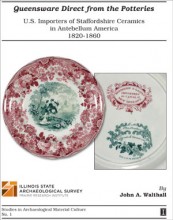
This 2015 Revised and Expanded Edition, written by an archaeologist, concerns the use of underglaze U. S. importers marks on Staffordshire pottery made during the American Antebellum Period (1820-1860). Over 100 such importers are listed in this directory, which geographically spans the entire country, from Massachusetts to California and from the Great Lakes to the Gulf Coast. Placing the name of American importers of Staffordshire earthenware in under glaze transfer print demonstrated to the buying public that these local merchants had special ties to the English manufacturers which, it was thought, would enhance the chances of the importers not only obtaining the latest fashions promptly but also comparatively cheaply. This strategy was successful decade after decade, until new technology and inexpensive rail transportation in the late 19th century allowed industrial potteries in Ohio and elsewhere in the United States to capture the ceramic tableware market from their British rivals.
Since the importer data base presented in the book owes so much to the generosity of many researchers, it is fitting that it be made available as an Internet Publication which can be used by the widest audience of interested scholars. This format also allows the revision of the data base as new information becomes available (and it surely will). It also allowed the use of large numbers of color illustrations of Staffordshire vessels with importers backmarks. This 330 page book is the most detailed study yet written concerning pre-Civil War American importers of Staffordshire pottery and their British trading partners.
This well-illustrated, and detailed book should serve as a baseline study for future research into this most ubiquitous of artifacts found on early to mid-nineteenth century American archaeological sites – fragments of Staffordshire table and tea wares.
Request for Help with Importers Study
The author writes "I am in the process of revising the recently published ebook, Queensware Direct from the Potteries: U. S. Importers of Staffordshire Ceramics in Antebellum America, 1820 – 1860. I have a few more importer’s marks to add to the Directory, some updates, etc. I would greatly appreciate any help that TCC members can provide in my effort to make this research tool as complete and useful as possible." Email John Walthall.
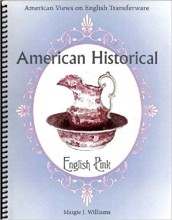
In addition to recording not only the potter and his pottery but the known forms and colors, she also provides a glimpse into the historical significance of every magical motif.
102 pages 8.5 by 11 inches Spiral binding $25.00
Order book directly from Margie Williams. $7 shipping for non-Transferware members, free for Transferware members. (Learn about membership.) Send your check and order to: Margie Williams, 1835 Oak Terrace, Newcastle, CA 95658 OR order directly from Amazon. Or contact Margie via email: mjhrww@gmail.com
Order from Amazon
This is an in-depth exploration of a portion of the many, many pots as well as the individual patterns produced in pink. Over 300 unique patterns are illustrated and historically explored in detail, including a glimpse at English transferware’s mysteries − both solved and unsolved. 414 pages, 9 by 12 inches, Perfect binding $65.00
Order all three or individual "Pink" books directly from Margie Williams. $7 shipping for non-Transferware members, free for Transferware members. (Learn about membership.) Send your check and order to: Margie Williams, 1835 Oak Terrace, Newcastle, CA 95658 OR order directly from Amazon. Or contact Margie via email: mjhrww@gmail.com

Looks at the myriad types, sets and pieces of ware, focusing on transfer-printed wares in pink. Takes an in-depth gaze at attributing and dating transferware, moves through collecting tips, explores the ware’s enormous range and its usage and ends with a glance at the English pottery industry. 160 pages 9 by 12 inches Perfect binding $45.00
Order book directly from Margie Williams. $7 shipping for non-Transferware members, free for Transferware members. (Learn about membership.) Send your check and order to: Margie Williams, 1835 Oak Terrace, Newcastle, CA 95658 OR order directly from Amazon. Or contact Margie via email: mjhrww@gmail.com
Order at Amazon
Staffordshire- vol. 1- has 536 patterns, Staffordshire- vol. 2- has 394 patterns, and Staffordshire- vol.-3 has 130 patterns (1060 patterns total). Serious collectors should have all three volumes to get the full benefit of Petra Williams knowledge and great research of transferware. Out of print, but copies commonly available on eBay, Amazon, and specialty used book sellers.

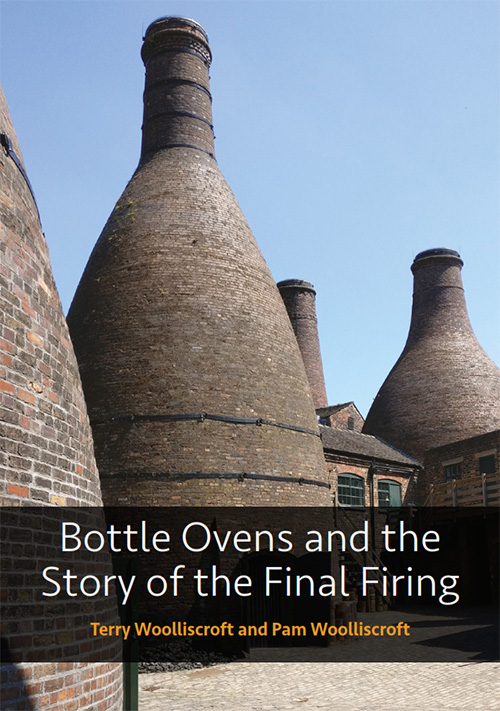 Note about the book: In 1978 Gladstone Pottery Museum in Stoke-on-Trent had the audacious idea of firing a potters' bottle oven, with coal, for the very last time. This traditional way of firing pottery had ended in the early 1960s with the introduction of the Clean Air Act. Before all the knowledge and skills of firing a bottle oven were consigned to history the museum embarked on a project which proved to be an enormous undertaking, massively complex and tremendously daunting. This book, published in the 40th anniversary year, tells the story of The Last Bottle Oven Firing.
Part 1 answers the question 'What is a bottle oven?'
Part 2 details the 1978 final firing with contemporary reports and previously unseen images.
Part 3 is a bottle oven dictionary explaining some of the unusual words specific to bottle ovens and the pottery industry.
Note about the authors: Terry Woolliscroft has a degree in ceramic technology and trained in commercial pottery manufacture at Josiah Wedgwood & Sons Ltd., Barlaston. His interest in bottle ovens developed quickly as a youth when he saw these remarkable buildings rapidly disappearing from The Potteries skyline. He photographed many potbanks before they were demolished. He joined Gladstone Pottery Museum as a volunteer and worked on the Potteries Bottle Oven Survey of 1976. He was a member of the team which organised the Last Bottle Oven Firing of 1978 and worked throughout making an audio record and logbook of the event. He also shovelled coal! He has created several websites including The Potteries Bottle Oven, The Last Bottle Oven Firing, The Gladstone Pottery Museum Story and The Potbank Dictionary.
Pam Woolliscroft (née Bott) has enjoyed a career in Stoke-on-Trent museums, working at Gladstone Pottery Museum, Chatterley Whitfield Mining Museum, Ford Green Hall and the Spode Museum. With her background in ceramic history she has worked as a consultant with specialist archives and museums and also for ArtUK. She began her museum work as a volunteer at Gladstone Pottery Museum eventually becoming curator under the leadership of David Sekers. She was a member of the team which organised the Last Bottle Oven Firing 1978 and became the key link between museum staff and over 70 volunteers. Pam kindled the first firemouth of the final firing. She has created the Spode History and Spode ABC websites and works as a volunteer at Stoke-on-Trent City Archives.
Quote from Angela Lee, Manager, Gladstone Pottery Museum, 2018 Echoes of the Last Bottle Oven Firing: The Last Bottle Oven Firing was one of the most important events in the history of Gladstone Pottery Museum with significant and lasting effects over the 40 years since that amazing achievement. The information recorded plus practical skills and knowledge gained by the volunteers who worked on the project is invaluable. It has continually informed the ways the museum can help visitors to understand coal-fired bottle ovens. It has also made a lasting impression on those who witnessed the event. Almost every day there will be a visitor to the museum sharing their memories of that special time. Gladstone Pottery Museum will forever be grateful for the vision, determination, organisational skills and hard work which created the Last Bottle Oven Firing.
Quotes from the book about Bottle Ovens
"09:50 Saturday 26 August 1978 Eight placers start placing ware into saggars. Full saggars taken to the oven to be set in. Arch bungs, between the bags, at the back of the oven, were set in first.
"12:37 Tuesday 29 August 1978. Kindling started. Eight firemouths set alight using flaming newspaper or a specially made flaming taper. Each firemouth was kindled in turn. Firemouth No.1 kindled by Pam Bott (Gladstone Pottery Museum Curator/member of Organising Committee). The crowd gave a spontaneous round of applause." The final firing on its way.
"Based on the measurement of the Bullers rings, years of experience and just gut feel Alfred Clough, the fireman, decided on making just one more baiting - No.9. "We need a big one," he said. "Have we got plenty of fuel in? Get everybody ready."
"Removing the clammins was quite a spectacle. Sparks flew from inside the oven suggesting the inside was under pressure. It was a carnival atmosphere. Oohs and aahs were heard and children shouted with glee."
"The oven grumbled as it cooled. The structure which had remained idle for many years had been brought to life by fire and had coped well with the inevitable expansion of brickwork and bonts. But as cooling and shrinkage took over it struggled once more with the movement of brick against brick, groaning as it returned to its normal size."
"Bottle Ovens - Out of the filth came great beauty. From these curious brick-built and iron-strapped structures came the most exquisite, delicate and utterly beautiful pottery in the world."
Published by Gladstone Pottery Museum, Uttoxeter Road, Longton, Stoke-on-Trent, ST3 1PQ, England
ISBN 978 0 9505411 3 6
Date of publication: 1 August 2018
£9.95
60 pages. Perfect bound. Portrait style 11.7 x 8.3 inches (A4) Over 25,000 words. Over 140 illustrations.
Available from the Gladstone Pottery Museum shop by phone, please call +44 1782 237777
Produced with the generous support of the Friends of the Potteries Museums & Art Gallery
Link to Gladstone Pottery Museum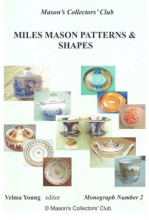
This is a 160 page, B5 size, full color monograph featuring studies of all known numbered and unnumbered patterns. Club research on body, shapes, gilding, numbering and identification is included. Over 1000 illustrations. Exclusively available from: Alan D White, Secretary, Mason’s Collectors’ Club, Lenborough House, Hillesden Rd, Gawcott, Buckingham, Bucks. MK18 4JF. UK.
Order HereRich with content for ceramic collectors, researchers, authors, curators, and historic archaeologists, the sites are sure to deliver value for their visitors. The exhibition’s curators continue to enhance them and, now, with site application upgrades, including a new magnification feature and upgraded content management capabilities, the TCC and its collaborators are pleased to relaunch these exhibits, all free to a worldwide audience.
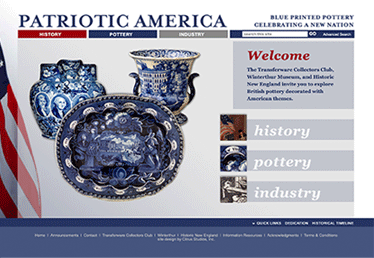
Branded Patriotic America, debuted in 2014 in collaboration with Historic New England, and the Winterthur Museum

Launched in 2015 in partnership with the Northern Ceramic Society.
 Not a member but want to receive email updates?
